01
Prana and Manas
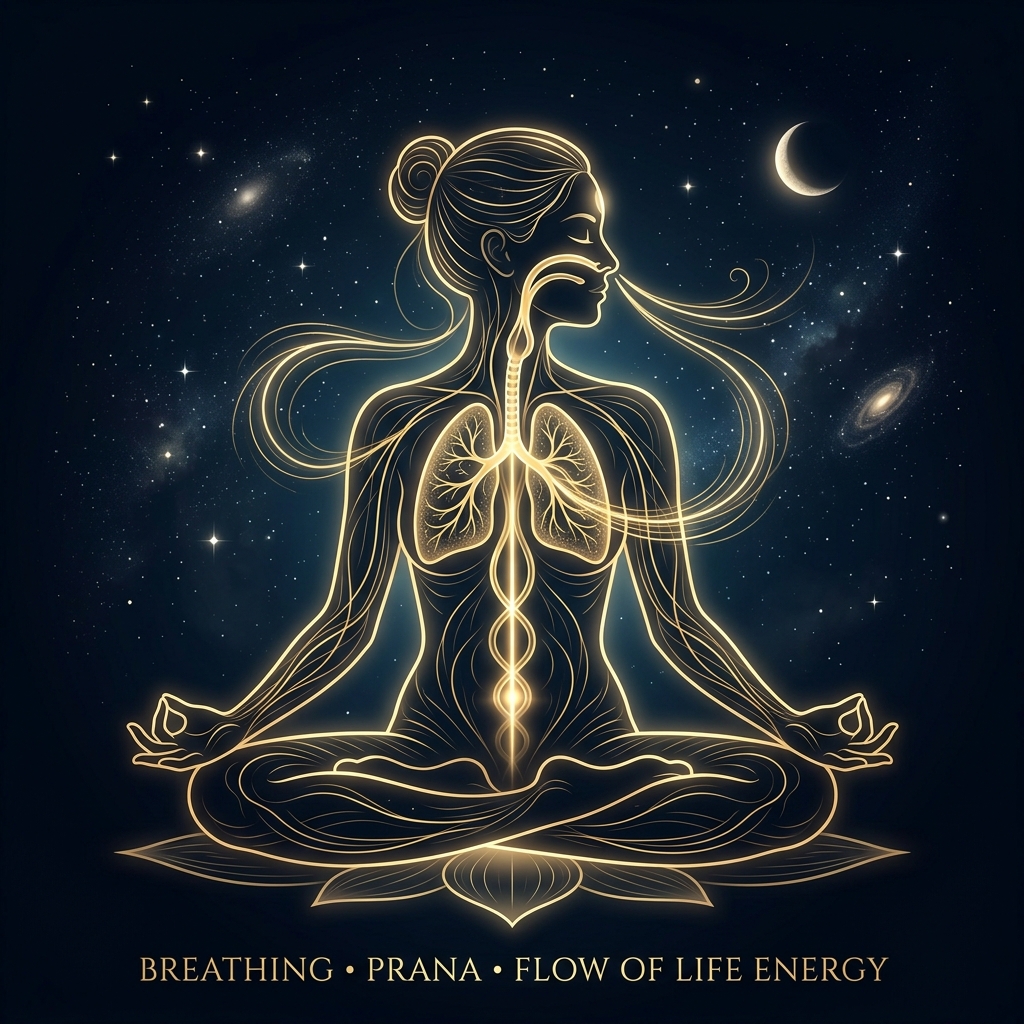
Yogic psychology asserts that breath (Prana) and mind (Manas) are two sides of the same coin. When the breath is erratic, the mind vibrates; when the breath is steady, the mind becomes still.
“What Am I — Qualia, Brahman, Neurons, or just Nothing?”
“Can regulating the breath calm the nervous system and quiet the mind?”
Chat with SagePranayama regulates respiration to stabilize the life force (Prana). Because the respiratory cycle is directly linked to the autonomic nervous system, conscious control of the breath provides a remote control for the mind.
Adopt Vishnu Mudra with the right hand. Close the right nostril with the thumb, inhale slowly through the left nostril. Close the left nostril, open the right, and exhale completely. Inhale right, close right, open left, and exhale left. Repeat for 5-10 cycles.
Inhale for a count of 4, hold gently for a count of 4, and exhale smoothly for a count of 8. The extended exhalation triggers a cooling, parasympathetic response.
Yogic psychology asserts that breath (Prana) and mind (Manas) are two sides of the same coin. When the breath is erratic, the mind vibrates; when the breath is steady, the mind becomes still.
Slow, diaphragmatic breathing with extended exhalations stimulates the vagus nerve, initiating parasympathetic dominance and soothing cardiac distress.