01
The Three States (A-U-M)
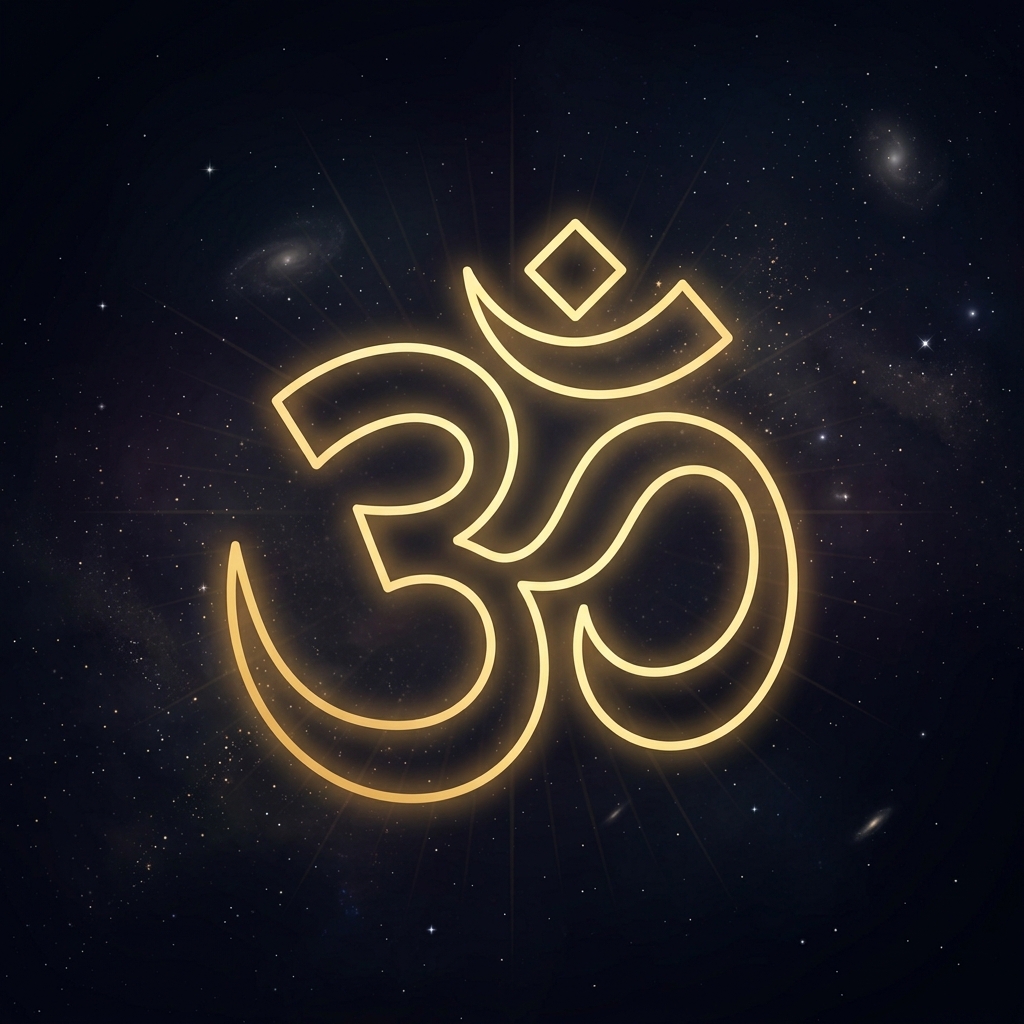
'A' represents the waking state (Vaisvanara); 'U' represents the dream state (Taijasa); 'M' represents deep sleep (Prajna). Each state has its own subject and object, but all are temporary.
“What Am I — Qualia, Brahman, Neurons, or just Nothing?”
“How do the states of waking, dreaming, and deep sleep point to the stateless Absolute?”
Chat with SageBased on the Mandukya Upanishad, this contemplation deconstructs personal identity by analyzing the three states of human experience to reveal the fourth (Turiya)—the silent witness consciousness.
Contemplate the waking world and your waking self. Realize that this state is temporary—it disappears completely when you fall asleep.
Contemplate the dream state. The mind creates its own space, time, and objects, which seem completely real until you wake up. Who is the dreamer?
Contemplate deep sleep. There are no thoughts, no world, and no ego, yet you wake up and say 'I slept peacefully.' Who was present in that silence?
Recognize that you are the changeless witness (Turiya) that runs through all three states, symbolized by the silence that remains after the sound of OM.
'A' represents the waking state (Vaisvanara); 'U' represents the dream state (Taijasa); 'M' represents deep sleep (Prajna). Each state has its own subject and object, but all are temporary.
Turiya is the silent awareness that witnesses all three states. It is represented by the silence that follows the chanting of the syllables A-U-M.